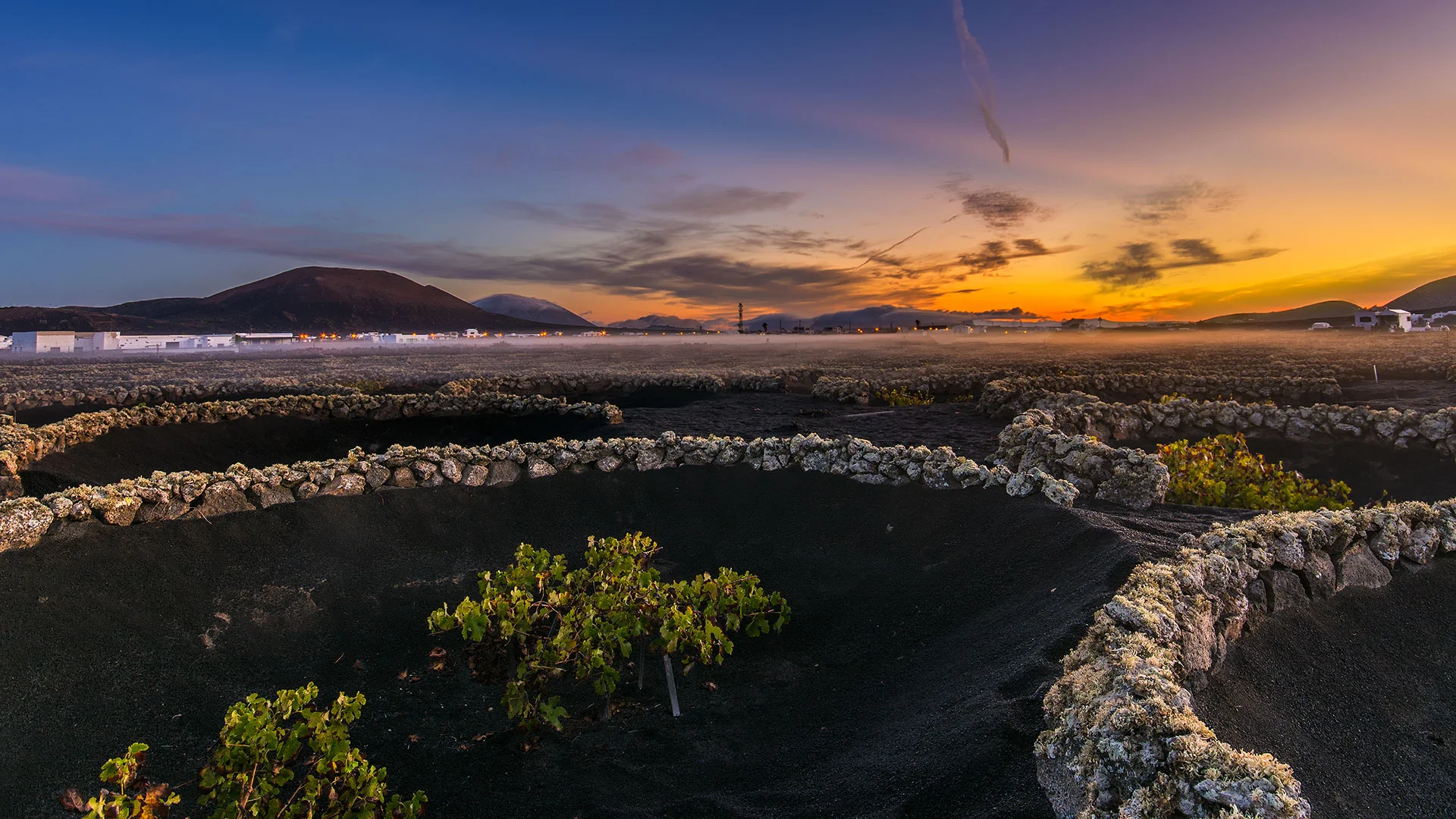
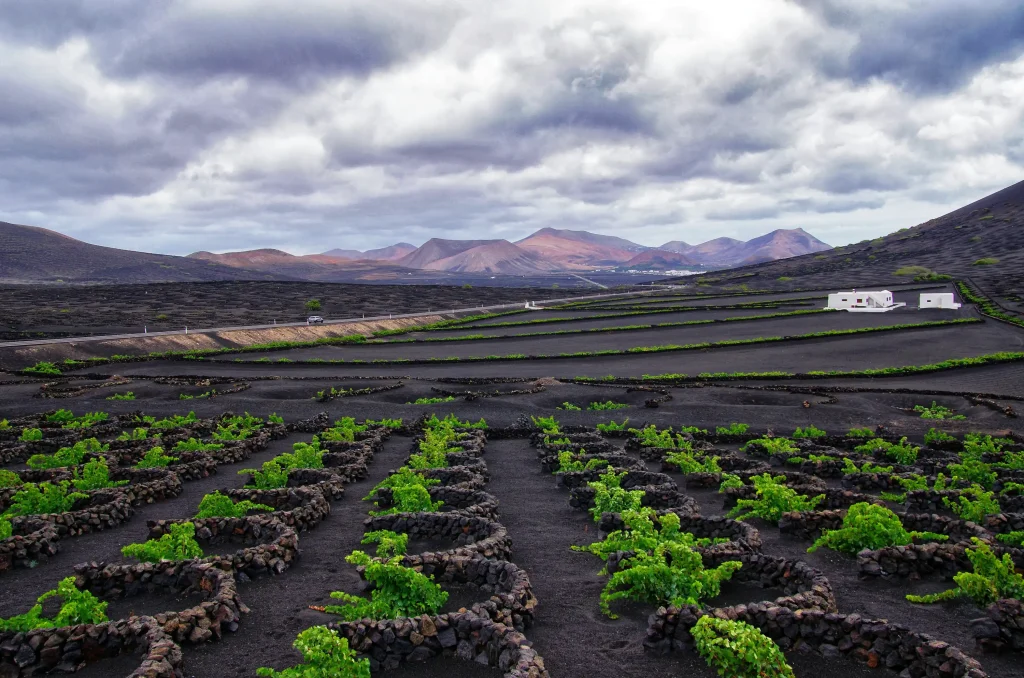
There’s a road in Lanzarote where the landscape stops resembling any other wine region on Earth. No green rows, no rolling hills: just thousands of pits dug into black ash, each with a vine at the bottom and a low stone wall shielding it from the wind. This is where Lanzarote’s volcanic wine comes from — and these are the five things to know before you visit La Geria.
1. Why Lanzarote’s wine grows in holes

Between 1730 and 1736, the Timanfaya eruptions buried some of the island’s best farmland under volcanic ash — known locally as picón. What looked like the end of agriculture turned out to be the start of something else entirely: farmers discovered that the porous ash layer traps moisture from the air and stops the soil beneath from drying out.
That’s the system you see from the road today. A pit is dug through the ash down to the fertile soil, vines are planted at the bottom, and a semicircular wall of volcanic stone — the zoco — is built to break the island’s constant wind. Every plant gets its own miniature crater. With no irrigation and one of the lowest rainfall levels in Spain, the vines survive on the humidity the picón captures from the night air and the trade winds.
Everything is worked by hand, plant by plant. There’s a reason this is often called “the impossible wine”.
2. Malvasía volcánica: the grape that only tastes like this here
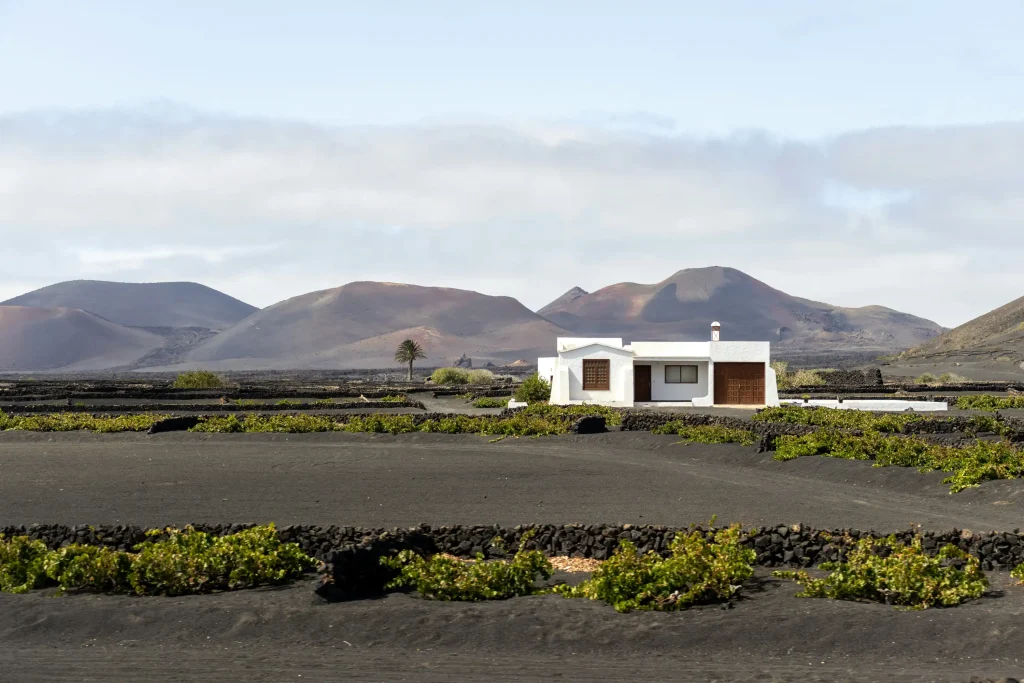
The star of La Geria is malvasía volcánica, the island’s signature grape. In this soil it produces dry white wines that are fresh, saline and mineral in a way you won’t find in malvasías from anywhere else: young vines on volcanic ash, a couple of kilometres from the sea, under the Vinos de Lanzarote Denomination of Origin.
If dry whites aren’t your thing, the wineries also make semi-sweet wines, moscatel and reds from listán negro. A tasting is the most honest way to decide what to take home — and if you live in the UK or Ireland, you can order volcanic wine online and have it delivered to your door instead of squeezing bottles into your luggage.
3. The earliest grape harvest in Europe (yes, at the height of summer)
Nobody waits for September here: Lanzarote’s harvest starts in July, the earliest in Europe. Visit the island in midsummer and you may catch the picking crews working among the pits first thing in the morning — a sight you won’t see anywhere else on the continent for another two months.
4. Three wineries to start with (without turning the day into a marathon)
There are more than a dozen wineries you can visit in the area. These three cover the route well:
El Grifo (San Bartolomé). Founded in 1775, it’s the oldest winery in the Canary Islands and one of the ten oldest still operating in Spain. Its Wine Museum, housed in the original building, explains better than any signpost how wine has been made here for two and a half centuries. A good first stop if you want context before you taste.
Bodega La Geria (LZ-30). The most accessible of them all: right on the wine road, surrounded by cultivation pits, and one of the most visited wineries in Spain. You can walk in, taste at the bar and step out onto the terrace with a glass in hand, looking over the protected landscape.
Bodegas Rubicón (LZ-30, directly opposite the one above). The former Cortijo de La Geria, an estate documented since 1570 that was buried by the eruptions and reborn as a winery in the 18th century. It keeps a wine press from 1802, the original manor house and a terrace looking straight out at the Timanfaya fire mountains. It works well as a longer stop: an unhurried tasting and lunch without moving the car.
A word on pacing: two or three wineries in a morning or an afternoon is the sweet spot. Any more, and the tastings start blurring into each other.
5. Planning your visit (and the designated-driver problem)
When to go. La Geria works all year round. First thing in the morning the wineries are quiet; at sunset, the light on the black picón is the best of the day. In August, avoid midday — the ash radiates the heat back at you.
Getting there. The route is the LZ-30 road, which crosses the valley between Uga and Masdache. There’s no useful public transport along it, so the two realistic options are a hire car or a guided tour with a driver.
The important detail: if the plan includes tastings, someone has to stay dry. It’s the reason so many visitors end up choosing the guided route — even the ones who hired a car for the rest of the trip.
Do the full wine route — tastings included, no driving required
Our wine tour through Lanzarote’s volcanic vineyards is a small-group experience — a maximum of 8 guests — led by a WSET-qualified professional (Wine & Spirit Education Trust). Over a morning or an afternoon you’ll visit three very different wineries, always pairing a major producer with small family-run or artisan bodegas, with around six wine tastings accompanied by local goat’s cheese and a walk among the pits to see the tools and techniques of this unique way of growing wine up close.
Best of all: pick-up and drop-off at your accommodation in an air-conditioned minibus is included, so nobody in your group has to skip the tastings. There’s an option to finish with a Canarian tapas meal at a winery, and the experience welcomes travellers aged 12 and over (with soft drinks for under-18s). Tell us your dates and how many of you there are, and we’ll arrange your route:
Book your La Geria wine tour →
Prefer to explore at your own pace? You’ll need a car to get around the island. With Jaira Rent a Car, use the code VISITLANZAROTE for 10% off, with offices in Playa Blanca, Puerto del Carmen and Costa Teguise:
Hire your car with a discount →
Fallen for the wine? Take it home without checking in a single bottle
It’s the classic La Geria problem: you taste a malvasía you love, and then it either doesn’t fit in your suitcase or doesn’t survive the journey. If you’re in the UK or Ireland, there’s a much better way — order your volcanic wine online and have it delivered straight to your door. It works the other way round too: try Lanzarote’s wines before your trip, and land on the island already knowing exactly what to taste.
Buy Lanzarote volcanic wine online →