A Volcanic Landscape Full of Life
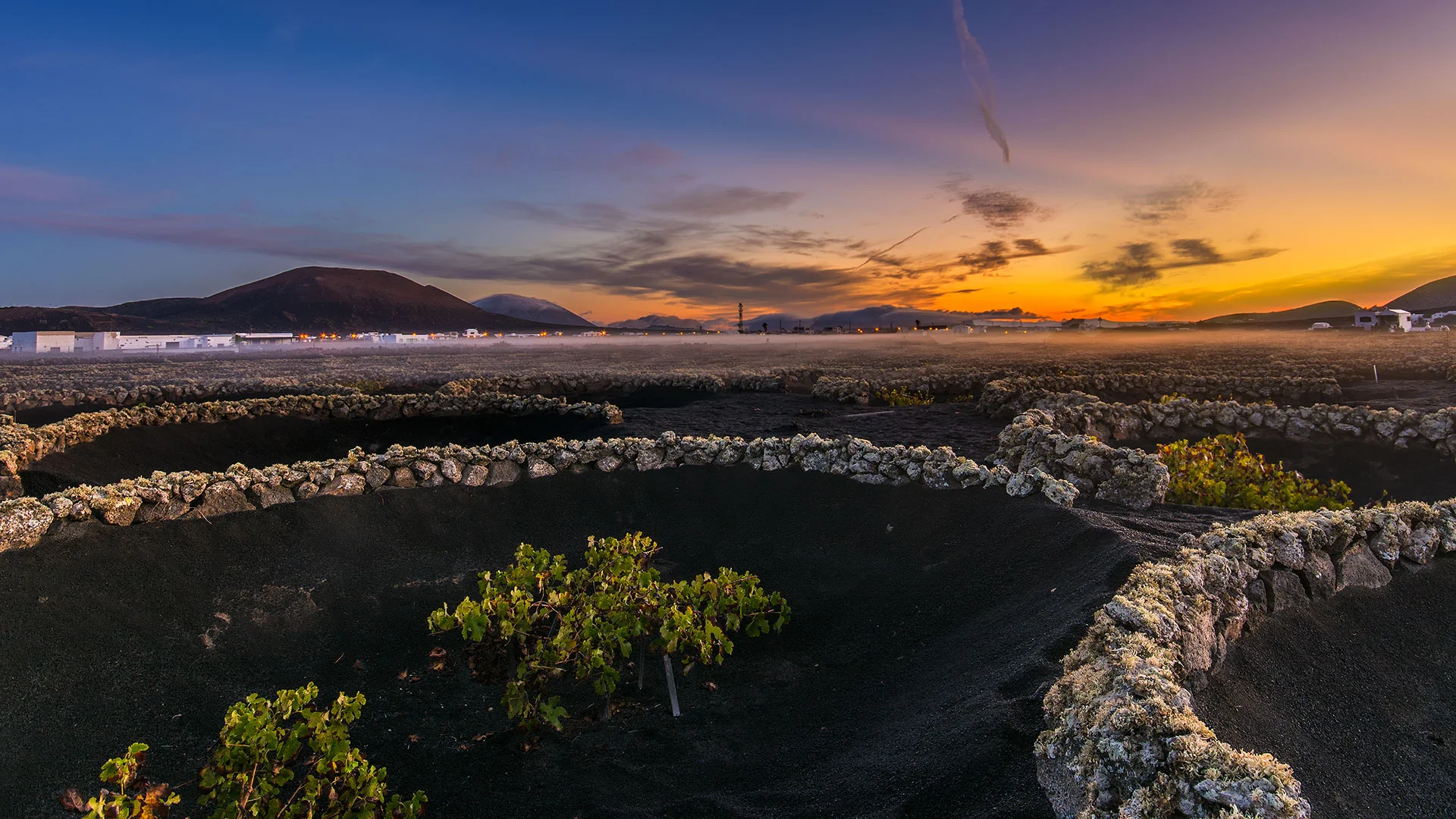
Lanzarote is internationally known for its lunar landscapes, vast lava fields, and the dramatic beauty of its volcanoes. Every year, thousands of travelers visit the island attracted by the image of a destination shaped by fire and the Atlantic Ocean. However, beyond the craters and volcanic formations, there is another lesser-known natural story that also defines the essence of Lanzarote.
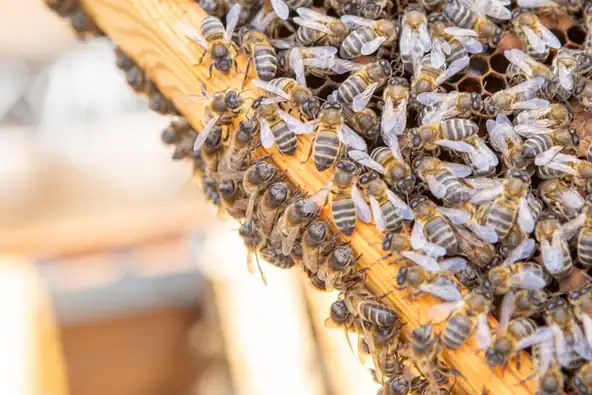
Among volcanic ash, wildflowers, and the island’s arid valleys lives one of the most important species for the biodiversity of the Canary Islands: the Canary black bee.
In this extreme environment, the story of Lanzarote Honeybees was born — a project deeply connected to conservation, sustainable beekeeping, and respect for Lanzarote’s unique ecosystem.
The Relationship Between Volcanoes and Biodiversity in Lanzarote
A Territory Shaped by Fire
The volcanoes of Lanzarote are an inseparable part of the island’s identity. Historic eruptions completely transformed the landscape, creating an environment where life had to adapt to especially challenging conditions.
Limited rainfall, constant winds, and volcanic terrain make Lanzarote one of the most unique ecosystems in Europe.
How Nature Adapted to Extreme Conditions
Despite the harsh environment, many plant species have successfully grown on volcanic soil. Endemic flowers, wild vegetation, and resilient shrubs have evolved to survive on land that initially appears completely inhospitable.
Thanks to this natural adaptation, many other species have also found shelter and food on the island.
The Essential Role of Pollinators
Within this fragile ecological balance, bees play a vital role. Without natural pollination, much of Lanzarote’s native flora would struggle to reproduce.
Bees help preserve a delicate ecosystem that is essential for the biodiversity of the Canary Islands.
The Canary Black Bee: A Survivor of the Volcanic Landscape
A Species Perfectly Adapted to the Canary Islands
The Canary black bee is a subspecies uniquely adapted to life in the Canary Islands. Over centuries, it has evolved to resist difficult weather conditions and make the most of the natural resources available across the archipelago.
Its adaptability makes it one of the key species within the island ecosystem.
Surviving in a Volcanic Environment
In Lanzarote, bees live surrounded by lava fields, strong winds, and scarce vegetation. Even so, they find food in small flowers growing on volcanic ash and in native plants adapted to dry climates.
This remarkable resilience has allowed them to continue supporting life in one of the world’s most extraordinary landscapes.
Honey Production Connected to the Land
The honey produced in Lanzarote directly reflects the island’s natural environment. Floral aromas, volcanic influence, and native vegetation combine to create a truly unique artisanal product.
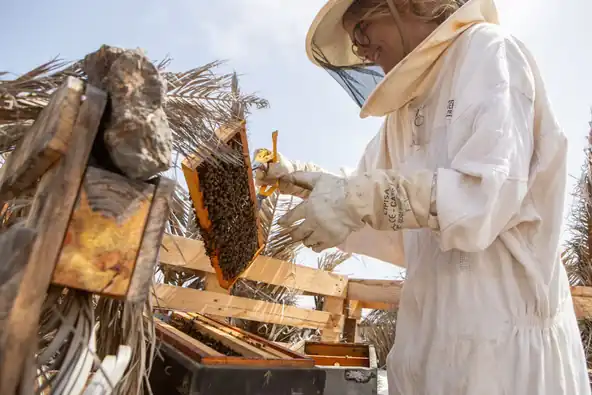
Behind every hive is a sustainable beekeeping philosophy focused on protecting both the bees and the environment where they live.
The Origins of Lanzarote Honeybees
The Vision of Klaus Guttenberger
The “Miel de Lanzarote” project was born more than 13 years ago thanks to the passion of Klaus Guttenberger, who dedicated much of his life to studying and protecting the Canary black bee.
Long before sustainable tourism became a global trend, Klaus already understood the importance of preserving local ecosystems and encouraging a respectful relationship between humans and nature.
A Philosophy Based on Natural Balance
From the beginning, the project’s beekeeping practices were based on sustainability and environmental respect. The main objective was never simply honey production, but the protection of an extremely fragile ecosystem.
This philosophy closely reflects the same spirit of harmony with nature promoted by César Manrique, whose vision helped shape Lanzarote’s identity.
Continuing the Legacy
Over time, the project evolved and found continuity thanks to Selina Vogel, who transformed it into “Lanzarote Honeybees” while preserving its original essence and bringing this experience closer to new travelers interested in discovering the island from a more authentic and responsible perspective.
What Visitors Can Discover at Lanzarote Honeybees
Nature-Based Experiences
Travelers looking to explore a different side of Lanzarote can enjoy an experience deeply connected to the island’s natural environment.
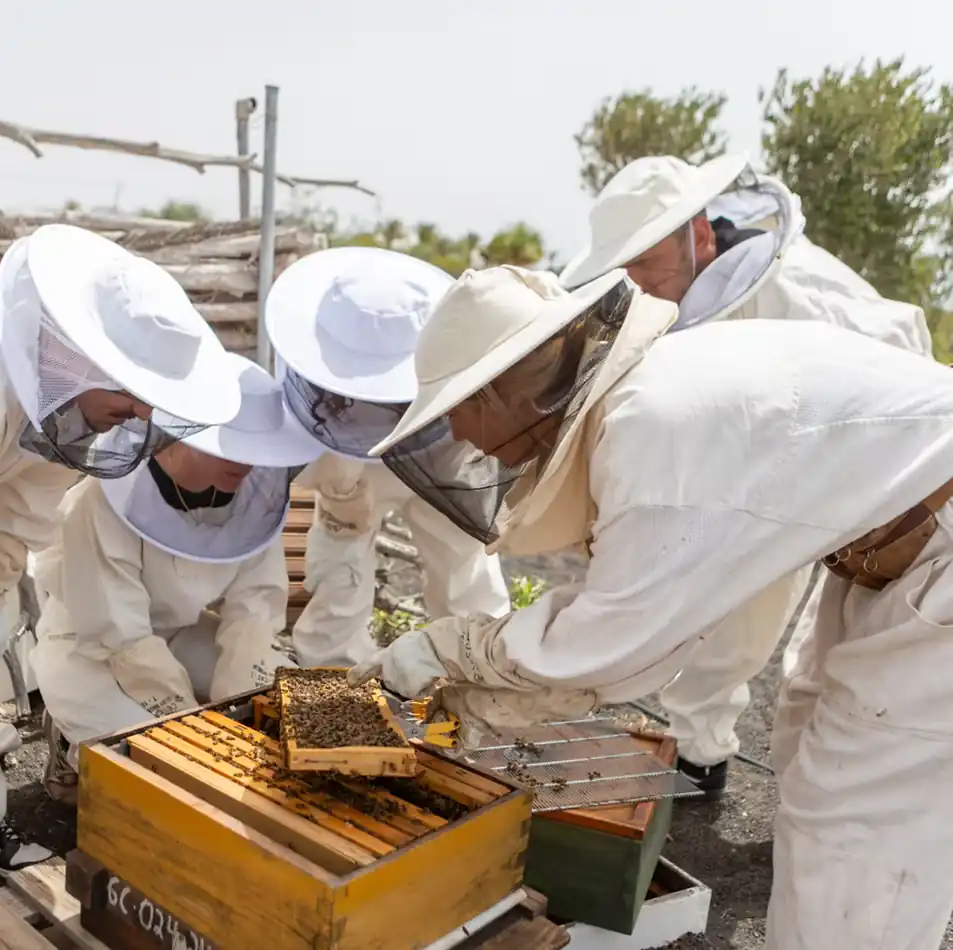
Visitors learn how bees survive in volcanic landscapes while gaining a deeper understanding of the local ecosystem.
Environmental Awareness and Sustainability
The experience also highlights the global importance of pollinators and the environmental challenges bees currently face around the world.
It helps visitors understand how small species can have an enormous impact on biodiversity conservation.
A Different Way to Experience Lanzarote
Beyond traditional tourist activities, Lanzarote Honeybees offers a direct connection to nature, sustainability, and local culture.
Some of the most interesting aspects of the experience include:
- Learning about the Canary black bee
- Discovering artisanal honey production
- Understanding how flora adapts to volcanic terrain
- Exploring the ecological importance of pollinators
- Connecting tourism with sustainability and conservation
Lanzarote: Much More Than Volcanoes
An Ecosystem Built on Resilience
Although volcanoes dominate the island visually, Lanzarote is also a land filled with silent life. Beneath the dry appearance of the landscape lies a complex ecosystem that has learned to flourish on lava.
Every flower and every bee forms part of this natural balance.
The Island’s Hidden Beauty
Many travelers discover in Lanzarote a different kind of beauty — one that goes beyond mass tourism and connects deeply with nature.
The island proves that even the harshest territories can become refuges of biodiversity and sustainability.
A Natural Story Worth Discovering
The story of Lanzarote Honeybees reminds us that Lanzarote’s true richness is not found only in its volcanoes, but also in the small forms of life that have adapted and thrived among them.
Because Lanzarote is not only an island of lava and craters.
It is also an island where flowers bloom on volcanic ash and where thousands of black bees continue working every day to keep one of the most extraordinary landscapes in the Canary Islands alive.
If you would like to book a guided tour, visit